Loading...
Massachusetts · Guided Tours
Boston Tours & Things to Do — 2026
Walk the Freedom Trail and beyond
Expert-Curated Selection · Only the Highest-Rated Experiences · By the Award-Winning USA Guided Tours Team
Boston Trolley, Hop-On & Sightseeing Tours
The most efficient way to get your bearings in Boston is a hop-on, hop-off trolley or bus — one ticket links the Freedom Trail sites, the North End, Back Bay, the waterfront, and Fenway, with narration filling in the history between stops. Hop-on routes let you get off wherever catches your eye and pick up the next trolley when you're ready, which suits a first day in a compact but dense city. Open-top amphibious sightseeing tours add the splash-into-the-Charles novelty. For getting further out, seasonal day trips run from the city to Salem (a Halloween favorite), Cape Cod, and Martha's Vineyard.
Boston Ghost & Haunted Tours
Few American cities have as much genuine dark history as Boston, and its after-dark tours make the most of it — the colonial hangings on the Common, the Revolutionary-era intrigue, the graveyards where the Puritans and patriots are buried, and the crimes and hauntings the guidebooks skip. Ghost and haunted walks trace the notorious sites and their stories through the oldest parts of the city, and the proximity to Salem gives the witch-trial history a short reach. These are small-group, on-foot, and story-driven, so the guide makes the tour — read reviews before booking. They run year-round and peak around Halloween.
Boston Food & North End Tours
Boston's best eating tour runs through the North End — the city's Little Italy, a dense few blocks of red-sauce institutions, salumerias, and the cannoli rivalry that locals will argue about all day. A guided food tour paces the tastings through the neighborhood's family-run shops and ties the food to three centuries of immigrant history. Broader culinary walks take in the seafood the city is built on — chowder, lobster rolls, oysters — and the Quincy Market stalls. Walking food tours keep the portions moving so you actually finish standing up, and the North End is compact enough to cover on foot.
4.8· 286
North End & Little Italy Food Tour with Local Dishes
From $86Check availability →
Curated July 2026
4.8· 172
North End Pizza Walking Tour with 3 Slices & Cannoli
From $89Check availability →
Curated July 2026
4.7· 143
Guided Delicious Donut Tour with Tastings
From $70Check availability →
Curated July 2026
Boston Freedom Trail & Historical Walking Tours
Boston is the most walkable major city in America for history, and the Freedom Trail is the spine of it — a route linking sixteen Revolutionary-era sites from Boston Common to the Bunker Hill Monument, past the Old State House, Paul Revere's house, and the Old North Church. You can walk the marked trail free and self-guided, and plenty do. But a guided walking tour buys what the brass line can't: a guide (often in period costume) who turns the sites into the story of the Revolution, a capped group size, and the context most self-guided walkers miss. If you want more than a map and a plaque, the guided walk is the upgrade worth making.
Boston Harbor Cruises & Sailing Tours
Boston grew up around its harbor, and a cruise is the way to see the city from the water it was built on — the skyline, the Harbor Islands, and the working port, with the Charlestown Navy Yard and the USS Constitution, the oldest commissioned warship afloat, on the shoreline. Sightseeing cruises and sunset sails are the relaxed options, and a high-speed thrill boat is the loud one. Most depart from Long Wharf and the waterfront, and the calmer morning water is best for the sailing tours.
Boston Historic Pubs & Tavern Tours
Boston's taverns are where the Revolution was argued into being — the Green Dragon, the Bell in Hand, and the Warren Tavern were the movement's meeting rooms — and a guided pub crawl is the liveliest way to walk that history and drink it in. Tours string together several of the historic taverns and pubs along and around the Freedom Trail, with a guide filling in the Revolutionary-era backstory between rounds; the premium version pairs the walk with a harbor ferry and a food-and-drink tasting. Most run in the evening and book up on weekends, so reserve ahead — and check whether the first round or tasting is included in the ticket.
4.9· 298
History Pub Crawl Tour Along the Freedom Trail
From $50Check availability →
Curated July 2026
4.9· 59
Historic Pubs Walking & Ferry, Food & Drink Tour
From $159Check availability →
Curated July 2026
Featured tour — booking soon
Reviews coming soon
Guided tour
Duration · Pricing shown at booking
Booking soon
Boston Whale Watching Tours
Boston is one of the best whale watching launch points on the East Coast — the boats run out to Stellwagen Bank, a federal marine sanctuary at the mouth of Massachusetts Bay where humpbacks, finbacks, and minke whales feed. The season runs roughly April through October and peaks in summer, so time this one to your visit; outside those months the boats switch to other harbor trips. Most departures leave from Long Wharf near the New England Aquarium, run three to four hours, and carry a naturalist who narrates the sightings. Mornings are usually the calmest water — and pack a layer, because it's cooler out on the bank than in the city.
4.5· 5k
City Cruises Whale Watching Cruise
From $86Check availability →
Curated July 2026
Featured tour — booking soon
Reviews coming soon
Guided tour
Duration · Pricing shown at booking
Booking soon
Things to Do in Boston
Beyond the guided tours, Boston packs Revolutionary history, a walkable set of distinct neighborhoods, a working harbor, and one of the best whale watching launch points on the East Coast into a compact city. Here is how to make the most of a trip to the birthplace of the American Revolution — from the Freedom Trail to the water and the North End.
The Freedom Trail & Revolutionary History
Boston's essentials line the Freedom Trail — Boston Common, the Old State House, Faneuil Hall, Paul Revere's house and the Old North Church in the North End, and across the river the Bunker Hill Monument and the USS Constitution in the Charlestown Navy Yard. You can walk the marked route free and self-guided, or take a guided (often costumed) walk for the story behind the sites. It's the densest concentration of Revolutionary-era history in the country.
Neighborhoods Worth Your Time
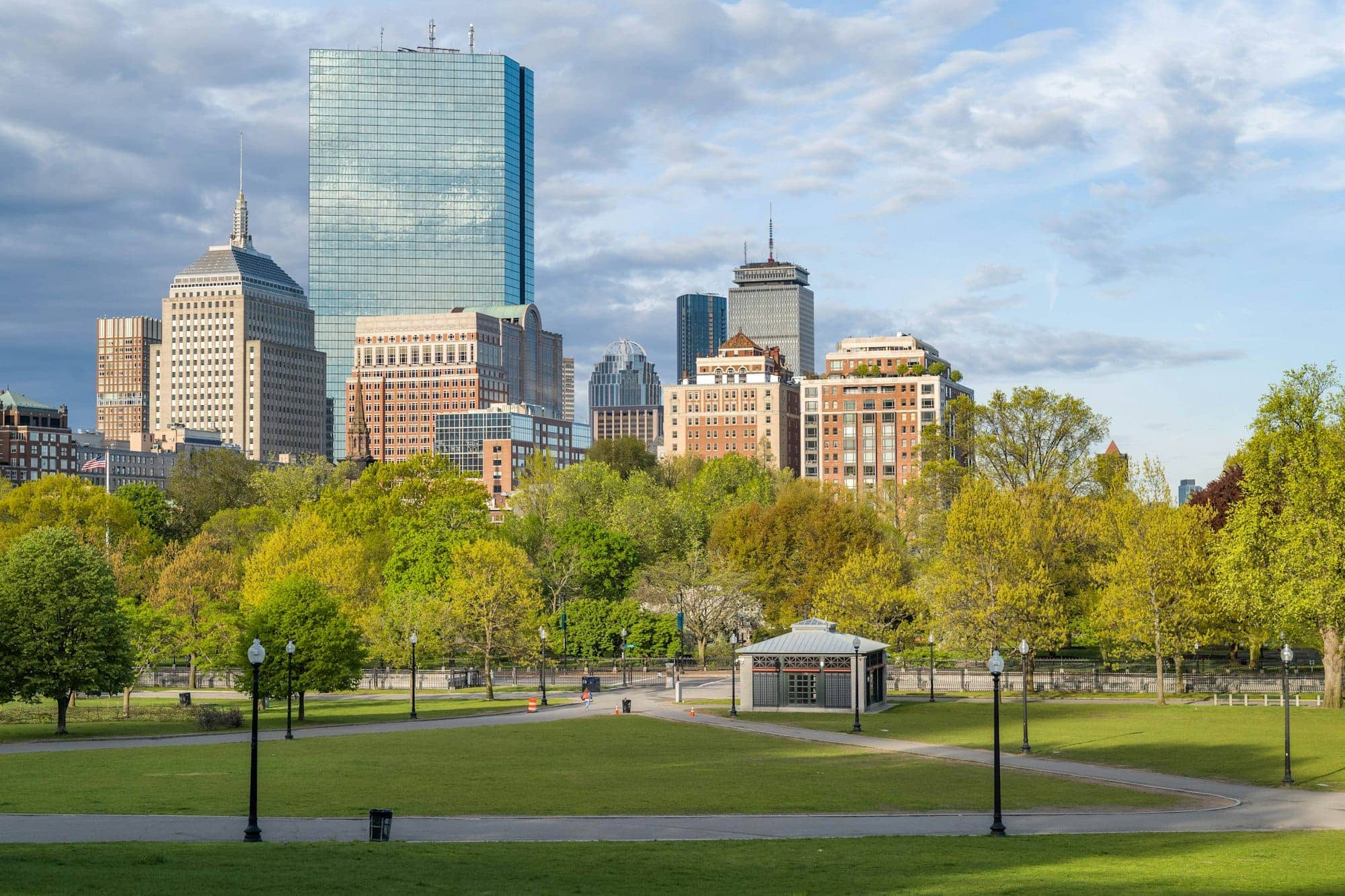
Boston rewards going neighborhood by neighborhood: the North End for Italian food and the oldest streets; Beacon Hill for gaslit lanes and brick row houses; Back Bay for the brownstones and Newbury Street; the Seaport for the new waterfront and breweries; and Cambridge across the river for Harvard Square. Each is walkable on its own, and the compact core means you can string a couple together in a day.
The Harbor & the Water
The harbor is central to Boston: sightseeing cruises and sunset sails take in the skyline and the Harbor Islands, Boston Light — the oldest lighthouse station in the country — stands out at the harbor mouth, and — from April through October — whale watching boats head to Stellwagen Bank for one of the best whale encounters on the Atlantic coast. Most depart from Long Wharf near the New England Aquarium.
Best Time to Visit
Summer and early fall (June–October) are peak Boston — warm weather, the full slate of harbor and whale watching tours, and the fall foliage day trips out of the city. Spring is mild and quieter; October adds the Salem Halloween draw and crisp walking weather. Winter is cold and the seasonal water tours pause, though the history walks, food tours, breweries, and ghost tours run year-round.
Frequently Asked Questions
What's the best way to see Boston in a day?
A hop-on, hop-off trolley or bus is the most efficient first move — one ticket links the Freedom Trail sites, the North End, Back Bay, the waterfront, and Fenway, and you get off wherever you like. Boston's core is compact, so many visitors pair the trolley with a walking tour of the Freedom Trail for the history up close. If you have a spare day, seasonal trips run out to Salem, Cape Cod, and Martha's Vineyard.
Do I need a guided tour for the Freedom Trail, or can I walk it myself?
You can absolutely walk the Freedom Trail free and self-guided — it's a marked brick line linking sixteen Revolutionary-era sites from Boston Common to Bunker Hill. A guided walking tour buys what the line can't: a guide (often in period costume) who turns the sites into the story of the Revolution, a smaller group, and the context most self-guided walkers miss. If you want more than a map and a plaque, the guided walk is the upgrade.
When is whale watching season in Boston?
Roughly April through October, peaking in summer, when humpback, finback, and minke whales feed at Stellwagen Bank off Massachusetts Bay. Outside those months the boats switch to other harbor trips, so book whale watching to match your dates. Trips leave from Long Wharf near the New England Aquarium, run three to four hours with a naturalist aboard, and mornings are usually the calmest — bring a layer, since it's cooler out on the water.
Where should I go for a food tour in Boston?
The North End — Boston's Little Italy — is the classic choice, a dense few blocks of family-run Italian shops, red-sauce institutions, and a serious cannoli rivalry, best explored on a guided walking food tour that paces the tastings and tells the immigrant history. Broader culinary tours take in the seafood the city is built on — chowder, lobster rolls, oysters — and the Quincy Market stalls.
Are Boston ghost tours worth it?
They're one of the things Boston does best, because the dark history is real — colonial hangings on the Common, Revolutionary intrigue, old graveyards, and the witch-trial history a short reach away in Salem. Ghost and haunted walks trace the notorious sites through the oldest parts of the city, small-group and on foot, and the guide makes the tour, so read the reviews. They run year-round and peak around Halloween.
Curated by Darko Marsalek
Booking links may be affiliate links; we may earn a commission at no cost to you.